Research
Overview
My research lies at the intersection of environmental, ecological, agricultural, and energy economics, with a primary focus on consumer and household behavior in the context of sustainability and climate change.
Rather than treating households as static economic units, my work explores how people allocate their time, choose energy sources, and respond to environmental policies amidst demographic transitions—such as aging and shrinking populations. By combining rigorous econometric analysis with interdisciplinary insights, I aim to better understand the household-level mechanisms underlying energy use and environmental behavior, and their implications for environmental and energy policy.
Current Projects (Working Papers & Work in Progress)
MATSUMOTO, S. and OTSUKI, T. Working from home, cooking apart? Telework, time constraints, and household food choices.
MATSUMOTO, S. Public vs. private rentals: Which one wins on energy efficiency?
VELASCO-FERNANDES, R. and MATSUMOTO, S. Activity-based energy intensity in Spanish households: The role of household composition.
BAUDRIER, A. and MATSUMOTO, S. Strange bedfellows? Public support for carbon border adjustment measures
Selected Publications
Aging and Energy Consumption in Europe
Ramos-Martín, J. and Matsumoto, S. 2026. Living Smaller, Consuming More? The Energy Implications of Aging and Shrinking Households in Spain. Energy Research & Social Science Vol. 135: 104660.
Carbon Tax & Household Welfare
Matsumoto, S. 2023. The effects of carbon taxes on the welfare of households using multiple energy sources. Energy Economics, Vol. 126: 106924.
Efficiency Investment vs. Curtailment
Matsumoto, S. and Sugeta, H. 2022. Efficiency investment and curtailment action. Environmental and Resource Economics Vol. 83: 759–789.
Ecosystem & Consumer Values
Matsumoto, S. 2020. Do individuals free ride on participation in environmental policies? Personal values and waste management practices. Ecological Economics Vol. 174: 106669.
Top 10% Cited Paper / Appliance Demand Analysis
Matsumoto, S. 2016. Electric Appliance Ownership and Usage: Application of Conditional Demand Analysis to Japanese Household Data. Energy Policy Vol. 94: 214–223. (Clarivate's "Top 10% Adjusted Papers")
Time Allocation to Pro-environmental Activities
Matsumoto, S. 2014. Spouses' Time Allocation to Pro-environmental Activities: Who is saving the environment at home? Review of Economics of the Household Vol. 12 No. 1: 159–176.
Collaborations with Early-Career Researchers & Ph.D. Students
Over the years, it has been a great privilege to work closely with doctoral students and postdoctoral researchers. Our collaborations have covered a wide range of topics in environmental, energy, and applied economics.
Yang, X. and Matsumoto, S. 2023. To use or not to use, that is the question: Income and substitution effects in the feed-in tariff system for solar-generated electricity. Japan and the World Economy Vol. 68: 101211.
Wang, J. and Matsumoto, S. 2021. Can subsidy programs lead customers to select “greener” products?: Evidence from the Eco-car program in Japan. Research in Transportation Economics Vol. 91, 101066.
Onuma, H., Matsumoto, S., and Arimura, T.H. 2020. How much electricity is actually saved by the replacement with Light-Emitting Diodes (LEDs)? Economic Analysis and Policy Vol. 68: 224–238.
Inoue, N. and Matsumoto, S. 2019. An examination of losses in energy savings after the Japanese Top Runner Program? Energy Policy Vol. 124: 312–319.
Chifari, R., Lo Piano, S., Matsumoto, S., and Tasaki, T. 2017. Does recyclable separation reduce the cost of municipal waste management? Waste Management Vol. 60: 32–41.
Matsumoto, S. and Omata, Y. 2017. Consumer Valuations of Energy Efficiency Investments: The case of Vietnam's Air Conditioner Market. Journal of Cleaner Production Vol. 142: 4001–4010.
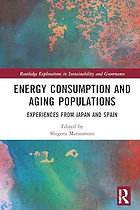


Books I have edited.